Photography
The Crips
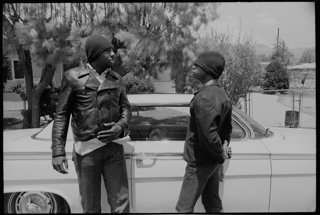
In the summer of 1973 I photographed Stanley “Tookie” Williams, founder of the West Side Crips, along with five original members. They all wanted their pictures taken, and posed — “fronting off,” as they called it. Five years later, there were 45 Crips gangs in Los Angeles County. By the early 1980s, the number of Crips “sets” in LA County had more than doubled. The crack cocaine epidemic pushed them into at least 41 states, and the gang became widely referenced in music, film, and media as a symbol of gang culture and urban violence — a fixture in American pop culture. Despite the notoriety, there are few photographs of the early members, and none presenting themselves as they wanted to be seen.

Black and white photo of five individuals standing outdoors, wearing jackets and hats, with power lines and utility poles in the background.

Two muscular men wearing hats and tank tops shaking hands outdoors.

Black and white photograph of a man wearing a wide-brimmed hat and military-style jacket, with a serious expression.
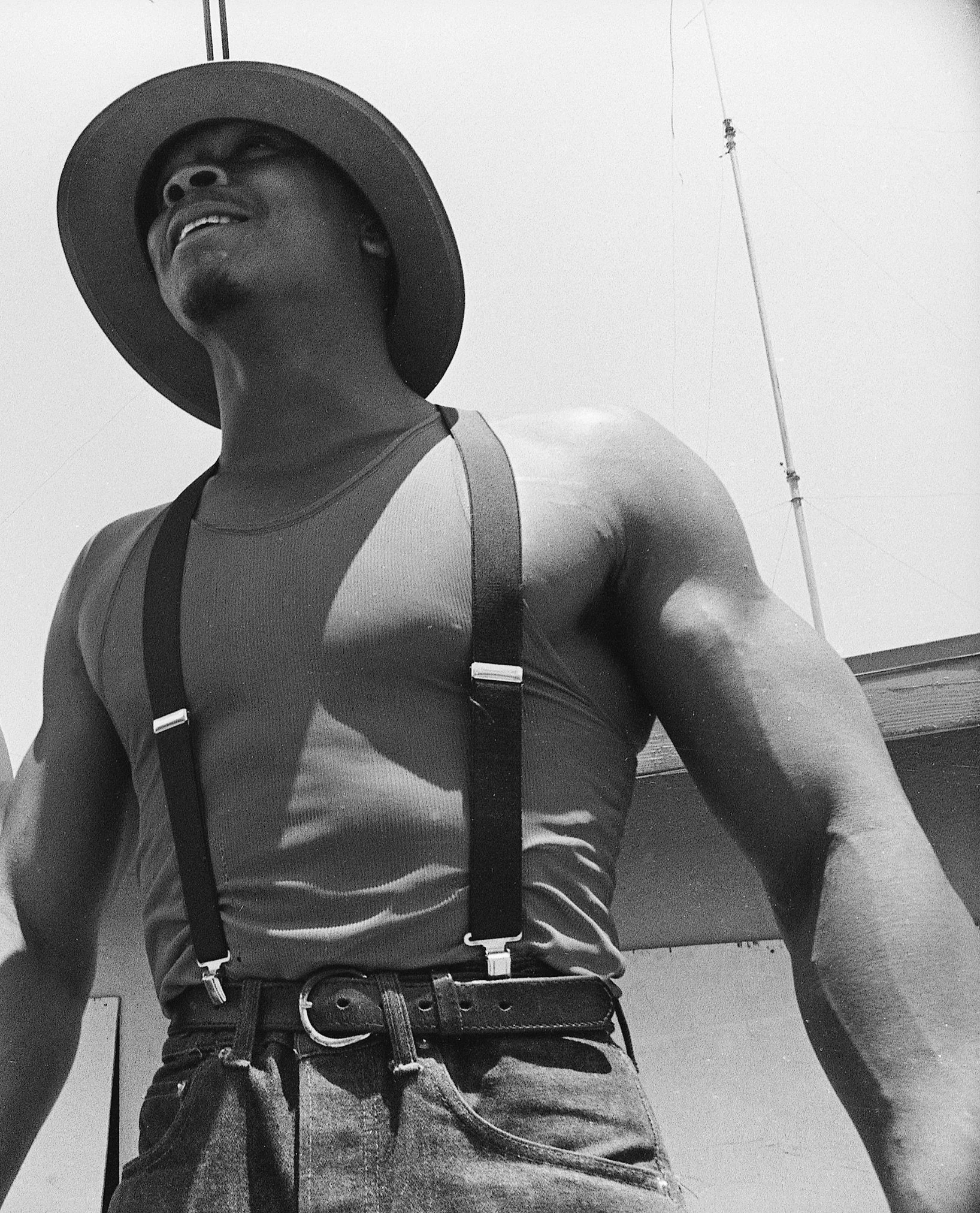
Black and white photo of a person wearing a wide-brimmed hat, a sleeveless shirt, jeans, and suspenders, sitting outdoors with power lines in the background.
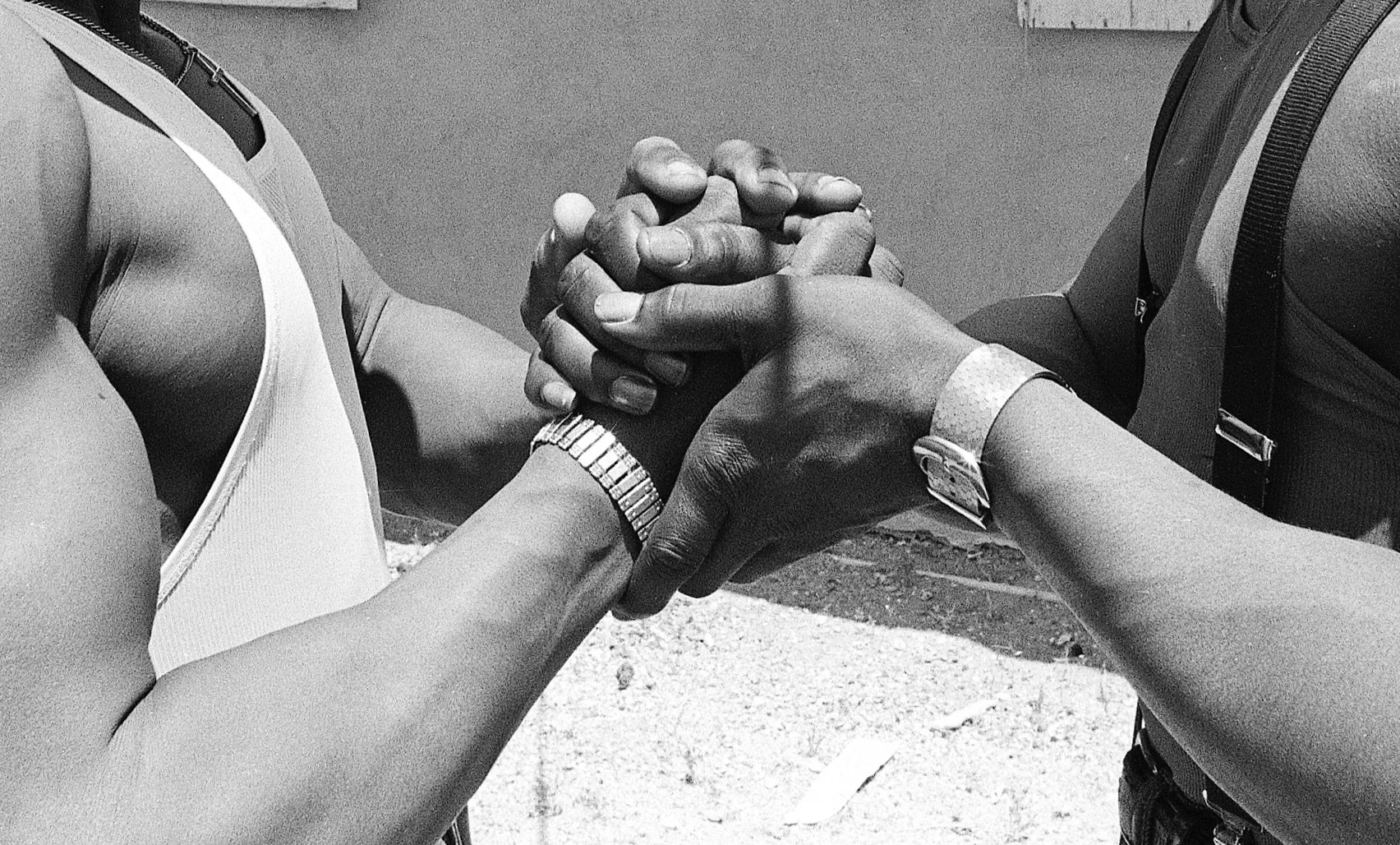
Two people holding hands in a handshake outdoors. One person is wearing a watch and bracelet, and the other has a wristband. The individuals are wearing sleeveless shirts or tank tops.
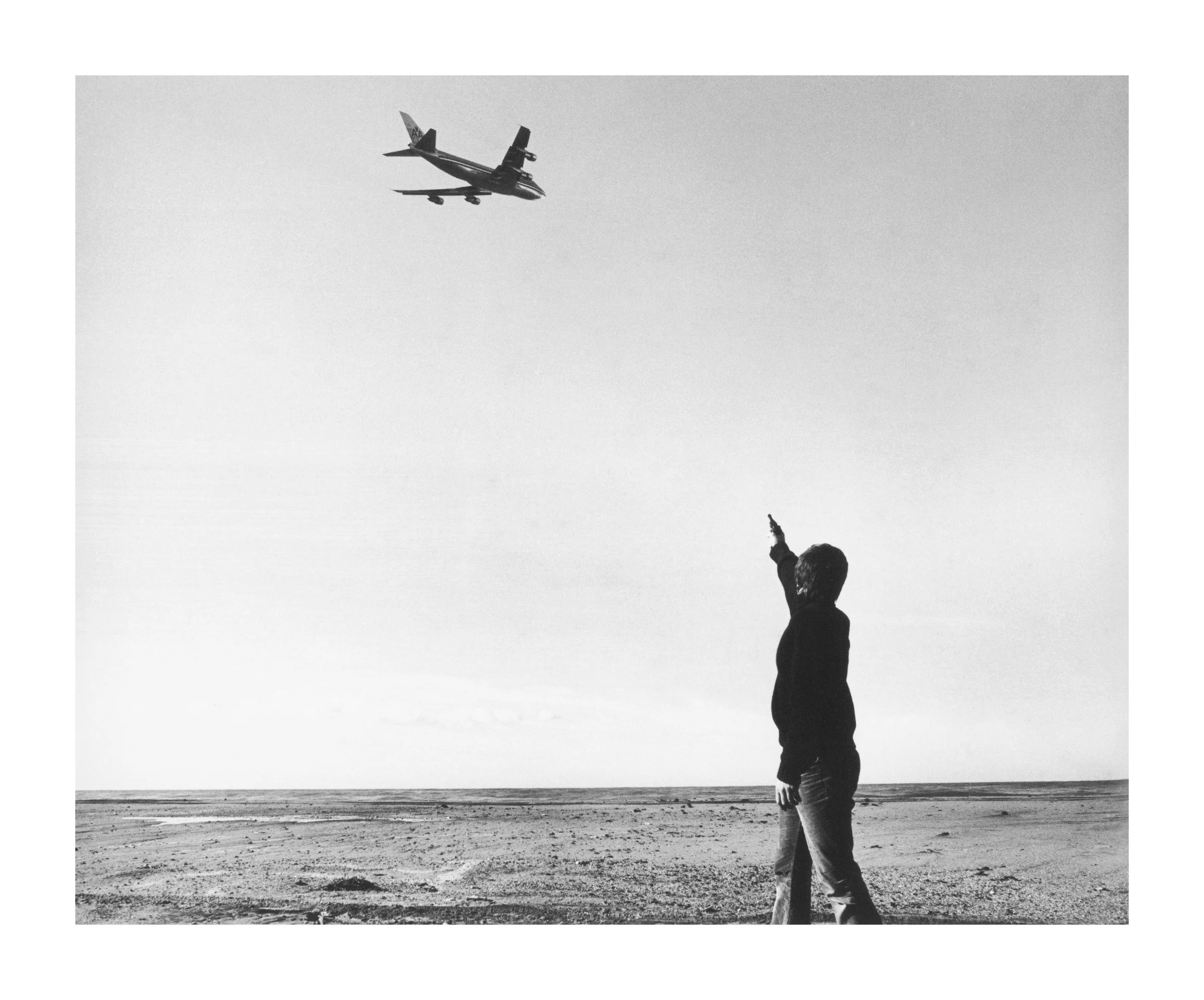
Chris Burden and “747”
“AT ABOUT 8 A.M. AT A BEACH NEAR THE LOS ANGELES INTERNATIONAL AIRPORT, I FIRED SEVERAL SHOTS WITH A PISTOL AT A BOEING 747.”
747, Los Angeles, California, January 5, 1973
Chris Burden (April 11, 1946 – May 10, 2015)
At 7:30 a.m., Burden and Terry McDonell met at Dockweiler State Park, where McDonell used a Nikon F2S to photograph Burden firing at the rising Boeing 747 from the deserted beach under its LAX flight path. McDonell was the only witness, and he made his image from behind, with Burden’s shooting arm at a 45 degree angle into the sky. The plane’s shape was clear and recognizable, and it seemed like the aircraft was safely out of the gun’s range, but maybe not.
When they were walking back to their cars, an LAPD cruiser pulled up on the cliff above the wide beach, but then drove away. When questioned by the FBI after McDonell’s photograph of 747 appeared in a magazine, Burden explained that the piece was “about the goodness of man — the idea that you can’t regulate everybody. At the airport everybody’s being searched for guns, and here I am on the beach and it looks like I’m plucking planes out of the sky.”
THE BEAR'S PAW BATTLEGROUND
I made this photograph from the spot where Chief Joseph of the Nez Perce surrendered to Colonel Nelson A. Miles of the United States Army on October 5, 1877. That spring, Joseph had led several hundred Nez Perce out of Oregon's Wallowa Valley — east across Idaho, down into northern Wyoming, then north toward Canada, where they hoped to join Sitting Bull and the Sioux. Fewer than two hundred warriors fought a running battle against soldiers many times their number, protecting their families, their wounded, and more than two thousand horses. They covered two thousand miles in three and a half months and were a day's ride from the border when Miles and the 7th Cavalry cut them off. The battle lasted six days.Otis Halfmoon, a full-blood Nez Perce whose relatives were killed here, walked me to the spot where Joseph handed Miles his rifle and said the weather was probably the same. The Bear's Paw Mountains, to the south and west, were what he was looking at when he spoke.
CHIEF JOSEPH'S SPEECH
I am tired of fighting. Looking Glass is dead. Toohoolhoolzote is dead. The old men are all dead. He who led the young men is dead. It is cold and we have no blankets. The little children are freezing to death. My people, some of them, have run away to the hills, and have no blankets, no food; no one knows where they are — perhaps freezing to death. I want to have time to look for my children and see how many of them I can find. Maybe I shall find them among the dead. Hear me, my chiefs. I am tired; my heart is sick and sad. From where the sun now stands I will fight no more forever.
Portraits


Landscapes

Park County, Montana, 1978

Socotra, Yemen, 2010

Masai Mara, Kenya, 2004

Hearst Castle, San Simeon, California, 2006

Clear blue ocean water with gentle waves, under a bright blue sky with scattered white clouds.